
RLP Letter: What It Means and What to Do Next
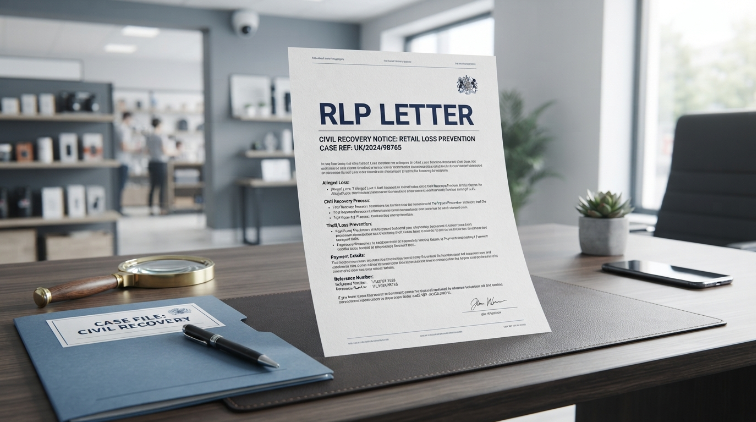
An RLP letter can arrive unexpectedly and look more serious than an ordinary demand for payment. In the UK, the term commonly refers to a civil recovery letter from Retail Loss Prevention (RLP), a company that acts for retailers seeking compensation after alleged shoplifting or employee theft. The important point is that a demand letter is not, by itself, a court judgment or proof that you owe the amount stated.
Understanding what the letter claims, what evidence may support it, and what happens if the dispute continues can help you respond calmly and appropriately.
| Key point | What it means |
|---|---|
| RLP | Retail Loss Prevention |
| Typical purpose | Civil recovery following alleged retail loss |
| Common allegation | Shoplifting or employee theft |
| Letter status | A civil demand, not automatically a court order |
| Possible next step | Negotiation, dispute, or civil proceedings |
| Main priority | Check the allegation and supporting details |
What Is an RLP Letter?
An RLP letter is generally connected with a retailer’s civil recovery process. RLP describes itself as working with retailers to recover losses associated with incidents involving alleged theft.
The letter may identify a retailer, provide details about an alleged incident, and request payment. The amount sought can include more than the value of merchandise because the retailer may claim additional losses or costs connected with investigating and handling the incident.
This creates an important distinction between criminal proceedings and a civil claim.
A criminal case concerns an alleged offence and is normally pursued by public authorities. A civil recovery demand is a claim by a private party seeking money or another civil remedy. The two processes can exist separately, so receiving a civil letter does not automatically mean that a criminal prosecution has occurred.
What Does the Letter Usually Contain?
The exact wording varies, but an RLP demand may include several important details.
Identification of the alleged incident
The correspondence may state:
- The retailer involved
- The date or approximate date of the incident
- The location of the store
- The goods allegedly involved
- The amount being requested
- A reference or case number
- A deadline for responding or paying
- Contact information for the organisation handling the claim
Read these details carefully rather than focusing only on the amount requested.
A mistake in the date, store, merchandise, identity of the recipient, or description of events can be significant when assessing whether the allegation is accurate.
The financial demand
The amount sought may be considerably higher than the retail value of the goods. Historically, civil recovery demands have sometimes included alleged administrative, security, investigation, or staff-related costs.
That does not automatically mean every amount in a letter has been established by a court. The legal basis for a particular claim and the recoverability of particular sums can depend on the facts and applicable law.
Is an RLP Letter the Same as a Court Claim?
No. This is one of the most important distinctions to understand.
A demand letter is correspondence asserting that money is owed or should be paid. A formal court claim is a separate legal step.
The Civil Procedure Rules explain that, before court proceedings begin, parties should normally exchange enough information to understand the dispute and attempt to resolve it where appropriate. A prospective claimant’s correspondence should explain the basis of the claim, relevant facts, what is being sought, and how a monetary amount has been calculated.
Consequently, an RLP letter should not automatically be treated as though a judge has already ordered payment.
At the same time, it should not simply be ignored. A civil demand can potentially be followed by further correspondence or formal proceedings.
What Should You Do After Receiving an RLP Letter?
The safest first step is to establish exactly what is being alleged.
1. Keep the entire letter
Save the original correspondence and any envelopes, attachments, emails, photographs, or other documents that accompanied it.
Do not rely solely on memory. The case reference, dates, deadlines, and wording may become important later.
2. Check the factual allegations
Compare the information in the letter with what you remember.
Consider:
- Was the stated date correct?
- Were you actually at that location?
- Do you recognise the incident described?
- Is the merchandise accurately identified?
- Did you pay for the goods?
- Was there a misunderstanding or mistake?
- Was someone else involved?
- Does the amount requested appear to be explained?
If you dispute the allegation, identify the specific facts you disagree with rather than responding only with a general denial.
3. Request clarification where necessary
If the letter does not explain the claim adequately, you can ask for information needed to understand what is being alleged and how the requested amount has been calculated.
The general pre-action framework in England and Wales emphasises exchanging sufficient information to understand each side’s position and identifying the factual and financial basis of a dispute.
Depending on the circumstances, relevant information might include an explanation of the alleged loss, the basis for additional sums, or documents relied upon by the claimant.
4. Do not miss a stated deadline
A deadline in a letter is not automatically equivalent to a court-imposed deadline, but it should still be taken seriously.
If you need more time to investigate the allegation or obtain professional advice, communicate that clearly rather than allowing correspondence to go unanswered.
What If You Disagree With the Claim?
A person who disputes an RLP demand does not have to pretend that the allegation is correct.
A response can explain, in factual terms, which parts of the allegation are disputed and why. Where appropriate, supporting documents can help establish what actually happened.
The Civil Procedure Rules state that where no specific pre-action protocol applies, parties should exchange correspondence and information proportionately. A defendant’s response should explain whether the claim is accepted and, if not, identify the disputed facts and reasons.
This makes a clear, organised response more useful than an emotional or lengthy argument.
If the circumstances are complicated, particularly where there is a substantial financial demand, disputed evidence, or a possibility of court proceedings, obtaining advice from a qualified solicitor or another appropriate legal professional can help you understand your position.
What Happens If the Matter Reaches Court?
An RLP letter does not itself create a court judgment. If the claimant decides to pursue a civil claim, formal court proceedings have to be initiated.
Once a genuine court claim is issued, the process changes. GOV.UK explains that a person receiving a money claim must respond according to the instructions and deadline associated with the claim. Depending on the service used, this can involve responding online or using paper forms.
A court claim should therefore be treated differently from ordinary pre-court correspondence.
Ignoring an actual court claim can have serious consequences, so the paperwork should be checked carefully to establish whether it is merely a demand letter or formal court documentation.
Common Misunderstandings About RLP Letters
“The letter means I have been convicted.”
Not necessarily. A civil recovery demand and a criminal prosecution are different processes.
“The amount written in the letter is automatically a court-ordered debt.”
No. A demand is an assertion by the claimant. A court order is issued through the court process.
“The value of the goods determines the entire claim.”
Not necessarily. The claimant may seek additional sums, but the basis and recoverability of those sums can be disputed.
“Ignoring the letter makes it disappear.”
There is no reliable reason to assume this. Failure to engage with a dispute can allow matters to progress without your position being clearly recorded.
“Every RLP case must end in court.”
No. Civil disputes can sometimes be resolved before proceedings are issued. The court’s own pre-action guidance encourages parties to explore resolution before litigation where appropriate.
The Key Difference Between a Demand and a Judgment
The most useful way to understand an RLP letter is to separate three stages:
- Allegation: A retailer or its representative says an incident occurred and claims a resulting loss.
- Civil demand: The recipient is asked to pay or otherwise resolve the claim.
- Court proceedings: If the dispute is not resolved and the claimant chooses to proceed, formal litigation may follow.
These stages are not interchangeable.
The Civil Procedure Rules emphasise that litigation should generally be treated as a last resort and that parties should consider negotiation or alternative dispute resolution where suitable.
Final Takeaway
An RLP letter is generally a civil recovery demand associated with an alleged retail loss. Receiving one does not, by itself, mean that a court has found you liable or that you have been convicted of an offence.
The sensible response is to preserve the correspondence, check the allegation carefully, understand how the requested amount has been calculated, and respond appropriately within any stated timeframe. If you dispute the claim, explain the disputed facts clearly and request information needed to assess the allegation.
Most importantly, distinguish an RLP demand from formal court paperwork. If genuine court proceedings arrive, follow the instructions and deadlines on those documents rather than treating them as another ordinary demand letter. For a disputed or financially significant claim, professional legal advice may be appropriate.