Connections Hints Forbes: Guide to the Popular Puzzle
Every day, thousands of puzzle fans begin their morning with a simple challenge: finding hidden links between seemingly unrelated words. The growing popularity of Connections, a daily word game that tests logic, vocabulary, and pattern recognition, has created a vibrant community of players who exchange strategies and discuss clues. Many readers also encounter Connections hints through publications such as Forbes, which provide guidance without immediately revealing the complete solution.
Unlike traditional crossword puzzles, Connections rewards lateral thinking. Players must identify subtle relationships among words, spot misleading patterns, and organize information quickly. The game combines language skills with problem-solving, making it both entertaining and mentally stimulating.
| Quick Facts | Details |
|---|---|
| Puzzle Type | Daily word association game |
| Number of Words | 16 |
| Goal | Create four groups of related terms |
| Difficulty Levels | Four categories from easy to difficult |
| Skills Required | Vocabulary, logic, pattern recognition |
| Common Themes | Sports, science, culture, language, history |
| Hint Sources | Puzzle communities, news outlets, strategy guides |
What Is Connections?
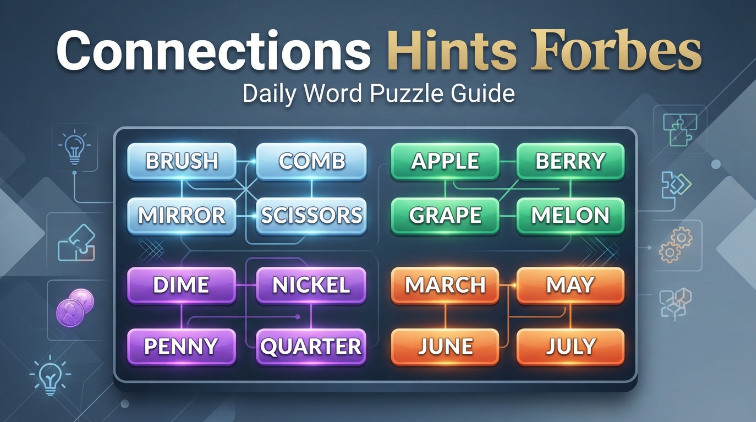
connections hints forbes is a daily word puzzle in which players receive sixteen words and must divide them into four groups of four. Each group shares a common theme, but identifying these links is often more difficult than it first appears.
Categories can include:
- Synonyms
- Types of animals
- Colors
- Famous people
- Scientific terms
- Geographic locations
- Cultural references
- Words with shared prefixes or suffixes
The challenge comes from the fact that many words appear to belong to several categories at once. Successful players must think beyond obvious relationships and uncover the intended pattern.
How Connections Hints Work
Gentle Guidance Instead of Full Answers
Hints are designed to assist players while preserving the enjoyment of solving the puzzle independently. Rather than giving away complete solutions, hints usually offer broad clues about the categories.
Examples of hint styles include:
- “One group relates to music.”
- “Another category involves transportation.”
- “Think about words associated with weather.”
This approach helps players maintain the challenge while receiving enough information to continue making progress.
Why Publications Offer Puzzle Hints
Daily puzzles encourage routine engagement, and many readers seek guidance when facing particularly difficult categories. Puzzle hint articles provide:
- Additional context
- Explanations of word relationships
- Strategies for identifying patterns
- Discussions of unusual categories
These resources contribute to a larger conversation among puzzle enthusiasts who enjoy comparing methods and solutions.
The Psychology Behind Word Puzzles
Connections is more than a simple game. It exercises several important cognitive skills.
Pattern Recognition
Humans naturally search for order and relationships. Connections activates this ability by requiring players to organize information into meaningful groups.
Flexible Thinking
Many puzzles include misleading words that fit multiple themes. Players must abandon incorrect assumptions and adapt their thinking.
Memory and Vocabulary
Strong vocabulary knowledge helps identify obscure links. Cultural references, scientific terminology, literature, and history often appear in categories.
Problem-Solving Satisfaction
Completing a difficult puzzle creates a sense of achievement. This reward encourages players to return daily and continue developing their skills.
Common Types of Connections Categories
Understanding common category styles can improve performance.
Direct Categories
These are straightforward groups with obvious similarities.
Examples:
- Fruits
- Countries
- Musical instruments
- Colors
Wordplay Categories
These require attention to language structure.
Examples:
- Words ending with the same letters
- Shared prefixes
- Homophones
- Hidden patterns
Cultural Categories
Some puzzles rely on broader knowledge.
Topics may include:
- Films
- Literature
- Sports teams
- Historical figures
- Popular entertainment
Trick Categories
These are designed to create confusion.
Words may appear to belong together but actually fit entirely different groups. Recognizing these traps is a major part of the challenge.
Strategies for Solving Connections
Start With Obvious Matches
Identify any group that immediately stands out. Completing one category reduces the number of remaining possibilities.
Look for Multiple Meanings
Many words have more than one definition. Consider all interpretations before making decisions.
For example:
- “Pitch” can relate to music, sports, sales, or color.
- “Bat” may refer to an animal or sports equipment.
Eliminate False Patterns
Not every apparent connection is correct. If a group feels forced, explore alternative relationships.
Study Language Structure
Pay attention to:
- Prefixes
- Suffixes
- Compound words
- Shared sounds
Language patterns frequently appear in advanced categories.
Take a Short Break
Stepping away for a few minutes can help reveal connections that were previously hidden.
The Role of Forbes and Similar Publications
Media outlets that provide puzzle hints often focus on balance. The goal is to help readers enjoy the experience without removing the challenge.
A typical hint article may include:
- General clues
- Difficulty ratings
- Explanations of categories
- Final solutions placed later in the article
This structure allows readers to decide how much assistance they want.
Puzzle coverage has become part of modern digital culture, similar to discussions surrounding crosswords, trivia games, and logic challenges. Players compare experiences, debate difficult categories, and share strategies.
Why Connections Has Become a Daily Habit
Short but Engaging
Most puzzles can be completed within a few minutes, making them ideal for busy schedules.
Social Interaction
Friends, families, and online communities often discuss difficult puzzles and compare solving techniques.
Continuous Learning
Players encounter:
- New vocabulary
- Historical references
- Scientific terms
- Cultural knowledge
This combination of learning and entertainment contributes to the game’s lasting appeal.
Balanced Difficulty
The puzzle is accessible to beginners while still challenging experienced players. Different category levels ensure that each puzzle contains a mix of easy and difficult connections.
The Future of Digital Word Games
Word puzzles continue to evolve alongside technology. Interactive formats, community discussions, and daily challenges have transformed simple games into shared experiences.
Future developments may include:
- Personalized difficulty settings
- Expanded thematic puzzles
- Educational applications
- More collaborative features
Despite these changes, the core appeal remains the same: discovering hidden patterns and solving problems through logic and creativity.
Conclusion
connections hints forbes become one of the most engaging modern word puzzles because it combines language, memory, strategy, and creative thinking. Resources such as Connections hints provided by publications like Forbes help players navigate difficult challenges while preserving the satisfaction of solving the puzzle independently.
The game demonstrates how simple concepts can create deep intellectual engagement. Whether approached casually or competitively, Connections continues to offer an enjoyable way to sharpen the mind, expand vocabulary, and appreciate the hidden relationships within language.