Serumcu Explained: Skincare Meaning and Serum CU Guide
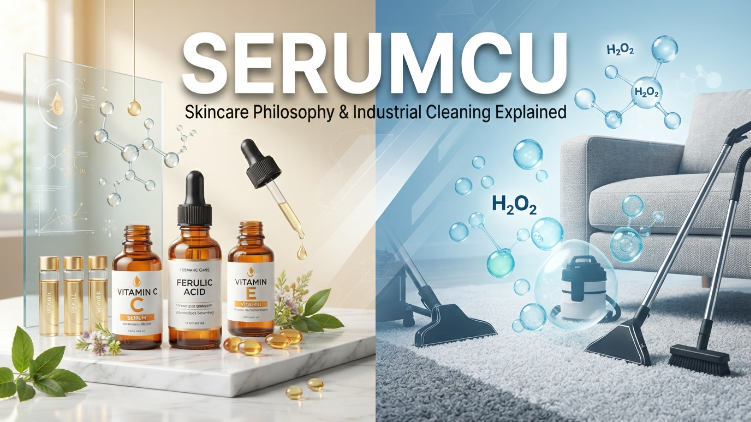
The word Serumcu carries two distinct meanings, and understanding the context is essential. In modern skincare discussions, the term describes a serum-focused philosophy centered on targeted active ingredients and simplified routines. In industrial cleaning, Serum CU refers to a professional-grade stain and odor remover designed for commercial carpet and upholstery restoration.
Although these meanings are unrelated, both emphasize precision and efficiency. One focuses on improving skin through carefully selected formulations, while the other uses advanced chemistry to remove difficult organic stains from surfaces. Knowing the difference helps avoid confusion and provides a clearer understanding of how the term is used in different industries.
| Category | Overview |
|---|---|
| Primary Meanings | Skincare philosophy and industrial cleaning chemical |
| Skincare Origin | Turkish-derived term combining “serum” with the suffix “-cu” |
| Skincare Focus | Minimalist routines with concentrated active ingredients |
| Industrial Product | Serum CU cleaning solution |
| Main Cleaning Ingredient | Stabilized hydrogen peroxide (18–20%) |
| Typical Applications | Skin treatments, carpet cleaning, upholstery restoration |
| Residue Profile | Cleaning product breaks down into water and oxygen after use |
What Does Serumcu Mean?
The meaning of Serumcu depends entirely on the context in which it appears.
In skincare discussions, the word originates from Turkish language construction. The suffix “-cu” generally refers to a person who specializes in or is devoted to a particular subject. Combined with “serum,” it describes someone who believes in serum-centered skincare rather than relying on complicated routines filled with numerous creams and lotions.
In another context, Serum CU is the name of an industrial cleaning solution developed for commercial restoration work. Despite the similar spelling, this product has no connection to skincare.
Understanding these separate meanings prevents misunderstanding when reading articles, product descriptions, or online discussions.
The Serumcu Philosophy in Modern Skincare
A Focus on Targeted Ingredients
The skincare interpretation of Serumcu reflects a growing preference for precision rather than excess. Instead of applying many products at once, the approach encourages choosing concentrated treatments designed for specific concerns.
Examples include:
- Vitamin C for brighter-looking skin
- Sodium Ascorbyl Phosphate for antioxidant support
- Ferulic Acid to improve antioxidant stability
- Vitamin E to support moisture retention
- Niacinamide for uneven skin tone
- Peptides for skin barrier support
Rather than layering several thick products, the goal is selecting ingredients with clearly defined purposes.
Why Minimalist Skincare Has Become Popular
Many skincare enthusiasts have moved toward streamlined routines because they are easier to maintain and may reduce unnecessary product overlap.
Benefits commonly associated with minimalist routines include:
- Fewer incompatible ingredients
- Simpler daily habits
- Easier tracking of product performance
- Lower chance of excessive layering
- Greater emphasis on ingredient quality
This philosophy encourages thoughtful product selection instead of following every new skincare trend.
Active Ingredients Commonly Associated with Serum-Focused Routines
Vitamin C
Vitamin C remains one of the most widely used antioxidants in skincare. It is commonly included in serums intended to improve skin brightness and help protect against environmental stressors.
Different forms exist, including Sodium Ascorbyl Phosphate, which is often selected because of its stability.
Ferulic Acid
Ferulic Acid is frequently paired with Vitamin C and Vitamin E. This combination helps stabilize antioxidant formulations while supporting their effectiveness.
Many advanced serums use this trio because the ingredients complement one another.
Vitamin E
Vitamin E is valued for supporting the skin barrier while helping maintain moisture. It often appears alongside antioxidant ingredients to create balanced formulations.
Other Performance Ingredients
Modern serum formulations may also include:
- Hyaluronic Acid
- Ceramides
- Peptides
- Panthenol
- Centella Asiatica extract
- Botanical antioxidants
These ingredients are selected based on individual skincare goals rather than applying every available treatment at once.
The Digital Rise of Serumcu
Online Communities
The skincare meaning of Serumcu has appeared more frequently within beauty blogs, educational websites, and skincare communities discussing evidence-based routines.
Rather than representing a single brand or certification, the term often describes a mindset focused on ingredient knowledge and intentional product selection.
Educational Content
Many skincare platforms explain:
- Ingredient compatibility
- Routine building
- Active concentration levels
- Morning versus evening application
- Skin barrier maintenance
This educational emphasis has encouraged consumers to learn more about formulations before purchasing products.
Understanding Serum CU as an Industrial Cleaning Solution
The second meaning of Serum CU belongs to an entirely different industry.
Serum CU is a commercial cleaning chemical engineered for restoration professionals. It is commonly used in carpet cleaning and upholstery maintenance where organic stains require deep oxidation.
Unlike household cleaners, it is intended for professional cleaning environments.
How Serum CU Works
Stabilized Hydrogen Peroxide
The primary active component consists of approximately 18–20% stabilized hydrogen peroxide.
Hydrogen peroxide functions as an oxidizing agent capable of breaking down many types of organic contamination.
Surface-acting wetting agents help the solution penetrate fibers more effectively by reducing surface tension.
This combination allows the cleaner to reach stains beneath the visible surface.
Organic Stain Removal
Professional restoration technicians commonly use products like Serum CU for difficult stains involving organic matter.
Examples include:
- Pet urine
- Body oils
- Blood
- Food residues
- Wine stains
- Other protein-based contamination
The oxidation process helps break apart stain molecules, making them easier to remove during cleaning.
Environmental Characteristics of Serum CU
One notable characteristic of Serum CU is its environmental breakdown process.
After completing its cleaning action, the hydrogen peroxide decomposes into:
- Water
- Oxygen
Manufacturers describe the formulation as highly volatile, leaving virtually no unwanted chemical residue after proper application.
This property makes it particularly useful in restoration environments where residue management is important.
Comparing the Two Meanings of Serumcu
| Feature | Skincare Serumcu | Serum CU Cleaner |
|---|---|---|
| Industry | Beauty and skincare | Commercial cleaning |
| Purpose | Targeted skincare routines | Organic stain removal |
| Users | Skincare enthusiasts and professionals | Restoration technicians |
| Key Components | Vitamins, antioxidants, peptides | Stabilized hydrogen peroxide |
| Goal | Address specific skin concerns | Remove stains and odors |
| Application | Skin | Carpets and upholstery |
Although they share a similar name, they belong to completely separate fields and should never be confused.
Common Misunderstandings
They Are Not Related Products
A common misconception is that Serum CU is somehow connected to skincare because of the shared word “serum.”
In reality:
- The skincare meaning refers to concentrated cosmetic treatments.
- The industrial meaning refers to a cleaning chemical.
There is no overlap in formulation, intended use, or application.
Context Determines the Meaning
When reading articles or product descriptions, identifying the surrounding topic quickly clarifies which meaning is intended.
Beauty discussions generally refer to serum-based skincare philosophies.
Cleaning industry publications refer to the commercial oxidation cleaner.
Future Outlook
The skincare interpretation of Serumcu is likely to remain associated with ingredient-focused beauty routines that prioritize simplicity and scientifically supported formulations.
Meanwhile, industrial cleaning technologies continue evolving toward formulations that combine effective stain removal with lower residue and improved environmental characteristics.
Although the two meanings developed independently, both represent a broader movement toward precision: one through carefully selected skincare ingredients and the other through specialized cleaning chemistry designed for demanding restoration work.
Conclusion
Serumcu is an uncommon term with two entirely separate meanings. Within skincare, it represents a focused approach built around concentrated serums, carefully selected active ingredients, and minimalist routines aimed at addressing specific skin concerns. In industrial cleaning, Serum CU is a professional oxidation-based solution formulated to remove difficult organic stains from carpets and upholstery using stabilized hydrogen peroxide.
Recognizing which context is being discussed eliminates confusion and provides a more accurate understanding of both concepts. While they share a similar name, their industries, purposes, ingredients, and applications are completely different.
FAQs
Is Serumcu a skincare brand?
Not necessarily. The term is commonly used to describe a serum-focused skincare philosophy, a specialist, or a serum-centered approach rather than referring exclusively to one brand.
What ingredients are commonly associated with the skincare meaning of Serumcu?
Vitamin C, Sodium Ascorbyl Phosphate, Ferulic Acid, Vitamin E, peptides, ceramides, and Hyaluronic Acid are among the ingredients often associated with serum-focused routines.
Is Serum CU safe for skincare use?
No. Serum CU is an industrial cleaning product intended for carpets and upholstery, not for cosmetic or personal care applications.
What stains is Serum CU designed to remove?
It is formulated to help remove difficult organic stains such as pet urine, body oils, blood, food residues, and wine stains from carpets and upholstery.
Why do the two meanings share a similar name?
The similarity is coincidental. One comes from Turkish linguistic construction related to skincare, while the other is the commercial name of an industrial cleaning product.