FeedBuzzard: Digital Publishing and Content Guide
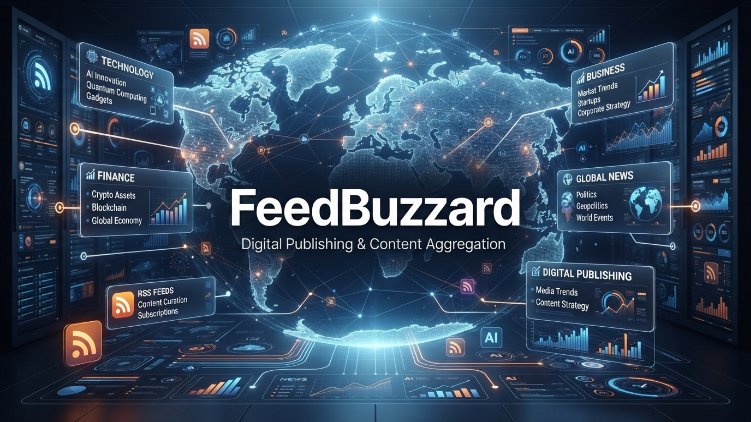
The modern web produces an enormous stream of articles, updates, trends, and niche discussions every minute. FeedBuzzard is positioned as a multi-niche digital publishing and content aggregation platform designed to bring different categories of online information into one centralized environment. The platform is associated with news aggregation, technology, business, finance, crypto, digital publishing, advertising, and content distribution.
For readers, the central idea is easier discovery. For publishers and digital professionals, the broader ecosystem involves content distribution and online visibility. Understanding how FeedBuzzard works requires looking beyond its name and examining the different functions associated with the platform.
| Key Fact | Overview |
|---|---|
| Platform | FeedBuzzard |
| Primary role | Digital publishing and content aggregation |
| Main content areas | Technology, business, finance, crypto, global news |
| Publishing ecosystem | Articles, editorial content, and digital distribution |
| Content discovery | Topic-based aggregation and curated updates |
| Related technology | RSS feeds, syndication, automated content delivery |
| Audience focus | General readers and digital professionals |
| Geographic advertising focus | Primarily US and UK markets |
What Is FeedBuzzard?
FeedBuzzard can be understood as a digital content hub that brings information from multiple subject areas into a single publishing environment. Rather than concentrating on one specialized category, its broader model covers several high-interest verticals.
These include:
- Technology and software
- Business and finance
- Cryptocurrency
- Global developments
- Digital marketing
- Online publishing
- Programming and web technology
This multi-topic structure gives the platform characteristics of both a content aggregator and a digital publishing network. Instead of requiring readers to move between numerous websites to discover different topics, aggregation platforms attempt to organize information into a more accessible stream.
The concept is particularly relevant to today’s fragmented media environment, where audiences often consume information from websites, feeds, social platforms, and specialized publications simultaneously.
How the FeedBuzzard Content Ecosystem Works
Content Aggregation
At the center of the platform is content discovery. The FeedBuzzard ecosystem is described as using topic-based systems to identify and organize information from across the web.
Topic modeling is an important concept in this type of system. It involves analyzing text and identifying themes, subjects, and relationships between pieces of content. A technology article, for example, may be grouped with other stories involving software, artificial intelligence, devices, cybersecurity, or digital infrastructure.
Aggregation can help reduce information overload by organizing large volumes of material according to subject relevance.
Curated Information Streams
A multi-niche platform also depends on categorization. Readers typically benefit when content is separated into recognizable subjects instead of being presented as one continuous stream.
For FeedBuzzard, the broader categories associated with the platform include technology, business, finance, crypto, and worldwide developments. This structure can make it easier to move from general news discovery to a specific area of interest.
FeedBuzzard and Digital Publishing
FeedBuzzard is also associated with a broader digital publishing model. Digital publishing has changed significantly as websites have moved beyond traditional articles and increasingly use distributed content networks.
A publishing platform can provide an environment where writers, organizations, and online publications produce and distribute content for digital audiences.
Several concepts are relevant to this ecosystem:
- Editorial publishing
- Sponsored articles
- Content distribution
- Guest contributions
- Digital outreach
- Publisher relationships
- Online audience development
These activities operate within a much larger publishing landscape in which websites compete for attention across search engines, social networks, newsletters, and direct traffic.
The Role of RSS and Automated Distribution
Understanding RSS Feeds
RSS remains an important technology for automated content distribution. An RSS feed provides structured information about recently published content, allowing compatible systems to retrieve updates without manually checking every website.
In an aggregation environment, RSS can support automated workflows such as:
- Detecting newly published content.
- Retrieving structured feed information.
- Classifying content by topic.
- Updating an aggregation interface.
- Delivering fresh items to readers.
This approach is useful because digital publishers can produce content continuously, making manual monitoring difficult at scale.
FeedBuzzard Code
The term “FeedBuzzard Code” appears in discussions surrounding the platform’s technical ecosystem. It is described in connection with backend instructions and automated identifiers used for mapping, synchronizing, or delivering live RSS information.
It is important to distinguish such terminology from a standalone programming language. In this context, the term is better understood as part of a technical workflow or naming convention associated with automated content distribution.
BuzzardCoding and the Technical Side
Another related concept is BuzzardCoding, which is associated with programming-oriented material. Its subject matter includes code examples, web development techniques, design approaches, and optimization concepts.
Programming resources of this type can serve intermediate developers who need practical explanations rather than highly theoretical documentation.
The broader relationship between coding resources and digital publishing is significant. Modern publishing platforms depend on software for:
- Content management
- Feed processing
- Website rendering
- Database operations
- Search functionality
- Performance optimization
- Content classification
- Automated distribution
Consequently, the technical infrastructure behind a publishing platform can be just as important as the articles visible to readers.
Advertising and Audience Targeting
The FeedBuzzard ecosystem is also associated with digital advertising solutions. Advertising dashboards can allow businesses to provide campaign information and configure display advertising around specific audiences or geographic markets.
Regional targeting is particularly useful for digital campaigns because audience interests can vary significantly between countries and communities.
A campaign aimed at US readers, for example, may require different creative material, timing, language choices, and subject positioning than one intended for UK audiences.
Effective digital advertising generally depends on several variables:
- Audience location
- Content category
- Campaign objective
- Creative format
- Placement
- Timing
- Performance measurement
These factors help explain why publishing platforms increasingly combine editorial content with audience-distribution technology.
Benefits and Challenges of Content Aggregation
Why Aggregation Matters
Content aggregation can make online information easier to discover. Instead of navigating through countless individual sources, readers can use categorized feeds and topic collections to locate relevant material.
For publishers, aggregation can also create another distribution pathway. However, aggregation works best when it maintains clear organization, reliable sourcing, accurate categorization, and useful context.
The Challenge of Information Quality
The biggest challenge facing any aggregation platform is information quality. Automated systems can process large amounts of content quickly, but automation does not automatically guarantee accuracy.
Important considerations include:
- Source reliability
- Duplicate content
- Outdated information
- Misleading headlines
- Incorrect categorization
- Context loss
- Unverified claims
Human editorial judgment remains valuable even when automated systems perform much of the initial filtering.
What Makes a Multi-Niche Platform Different?
A specialized publication normally develops authority around one subject. A multi-niche platform takes a broader approach.
This creates both opportunities and challenges.
A broad platform can attract readers interested in different subjects, while its infrastructure can support diverse publishing workflows. At the same time, maintaining consistent quality across technology, business, finance, and general news requires strong editorial standards.
The most effective approach is not simply publishing more material. It is organizing information so that readers can quickly understand what matters, why it matters, and where the information fits within a larger topic.
The Future of Platforms Like FeedBuzzard
The future of digital aggregation is likely to involve increasingly sophisticated automation. Artificial intelligence, semantic classification, recommendation systems, real-time feeds, and natural-language processing can help platforms organize enormous information streams.
However, technology will not eliminate the need for editorial responsibility. Automated systems can identify patterns, but context, verification, and judgment remain essential.
For FeedBuzzard and similar platforms, the strongest long-term model is likely to combine automated discovery with structured categorization and responsible publishing practices. As online information continues to expand, the ability to filter, organize, and present useful material will become increasingly important.
Final Thoughts
FeedBuzzard represents a broader trend in digital media: bringing content discovery, publishing, technical distribution, and audience communication into a connected ecosystem. Its association with multi-niche aggregation gives readers access to diverse subjects, while related publishing and advertising functions reflect the changing structure of online media.
Its technical concepts, including RSS-based distribution and automated content organization, demonstrate how software increasingly supports modern publishing. At the same time, quality control remains essential because a larger volume of information does not necessarily mean better information.
Ultimately, the value of a platform such as FeedBuzzard depends on how effectively it connects people with relevant, organized, and trustworthy digital content.
Frequently Asked Questions
What is FeedBuzzard?
FeedBuzzard is a multi-niche digital content platform associated with content aggregation, publishing, and online information distribution across areas such as technology, business, finance, and global news.
What topics does FeedBuzzard cover?
Its broader content ecosystem includes technology, business, finance, cryptocurrency, digital marketing, programming, and general global developments.
What is FeedBuzzard Code?
FeedBuzzard Code is a term associated with backend instructions and automated systems used for content mapping, synchronization, and RSS-based distribution.
What is BuzzardCoding?
BuzzardCoding is associated with programming and web-development resources, including coding examples, design techniques, and optimization guidance.
How does content aggregation work?
Content aggregation collects information from different sources and organizes it by topics or other classifications, allowing readers to discover multiple pieces of content through a centralized interface.